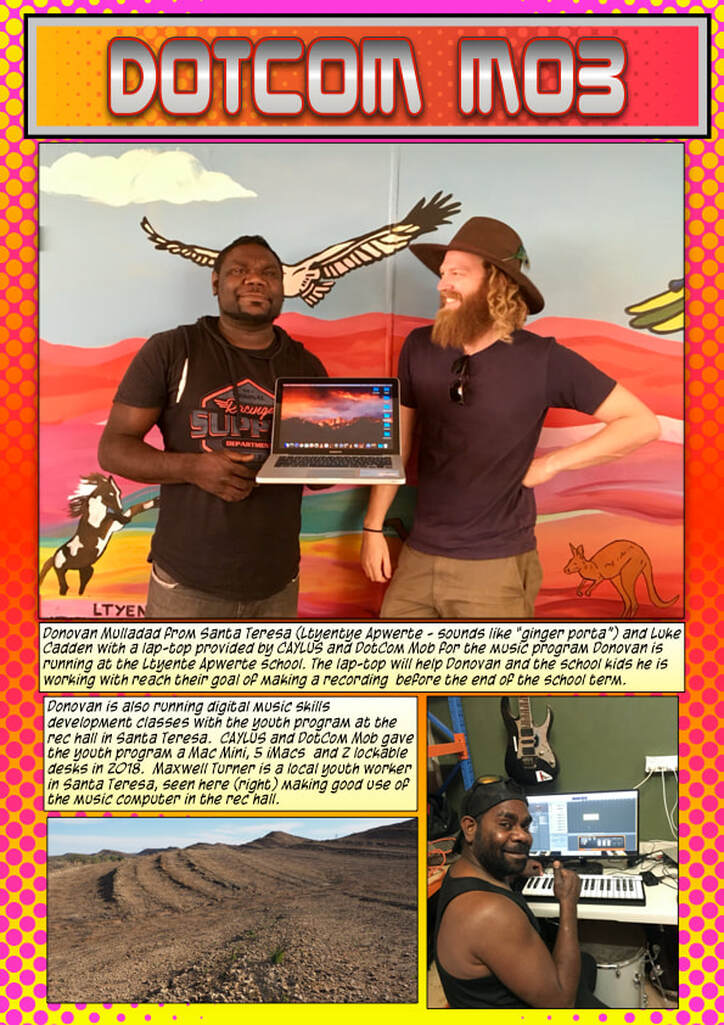
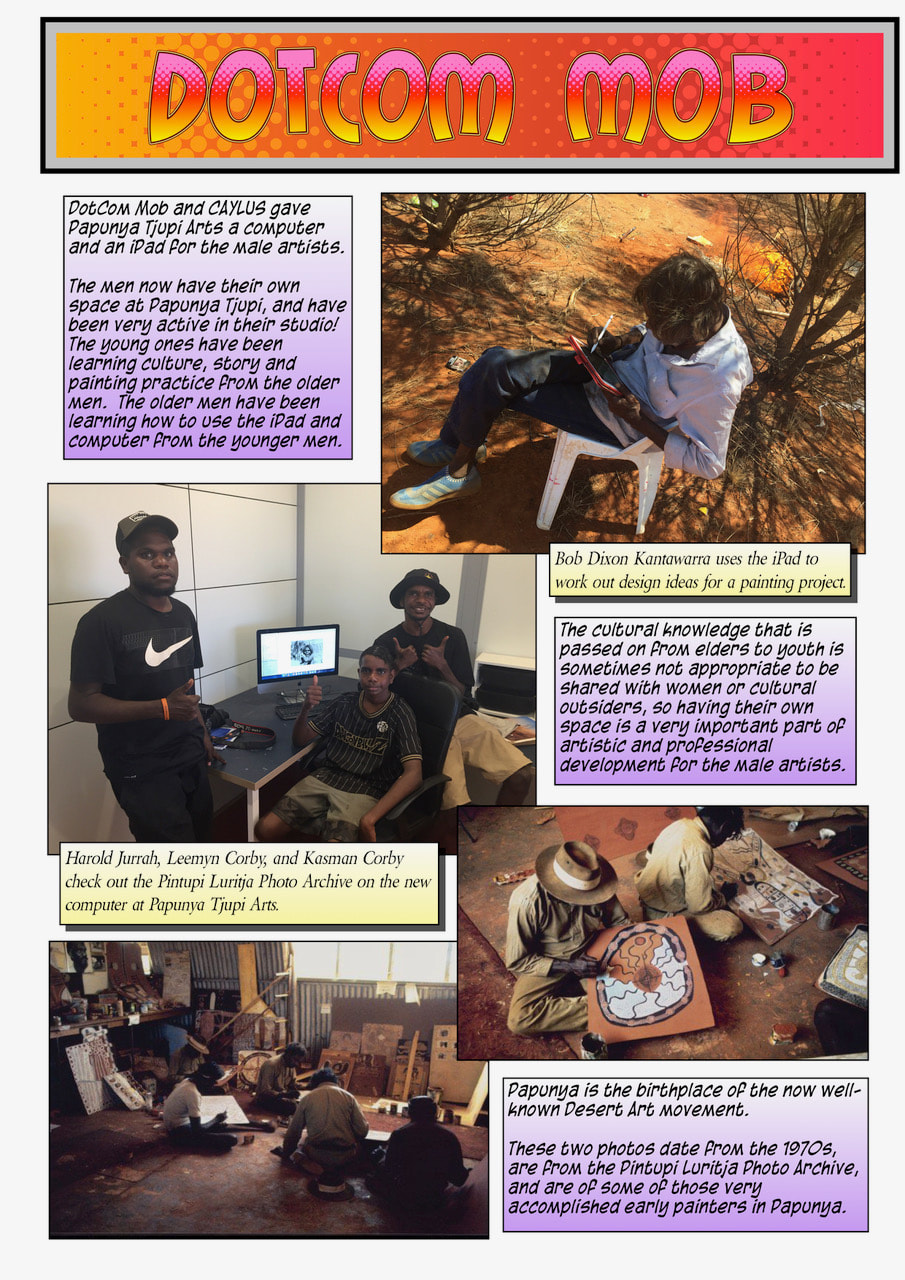
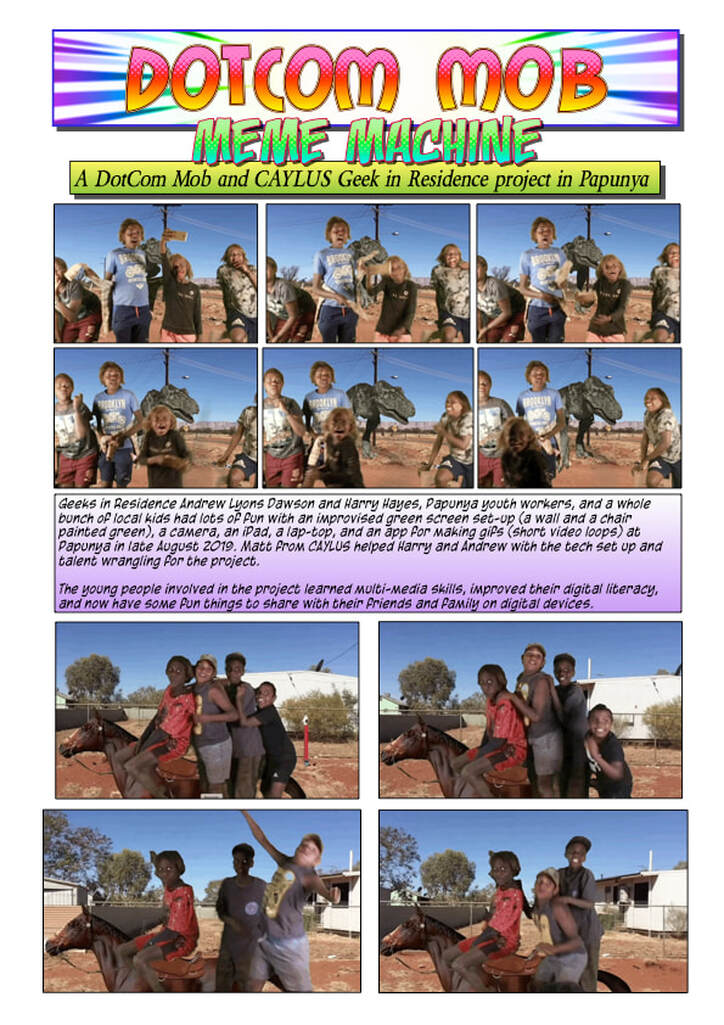
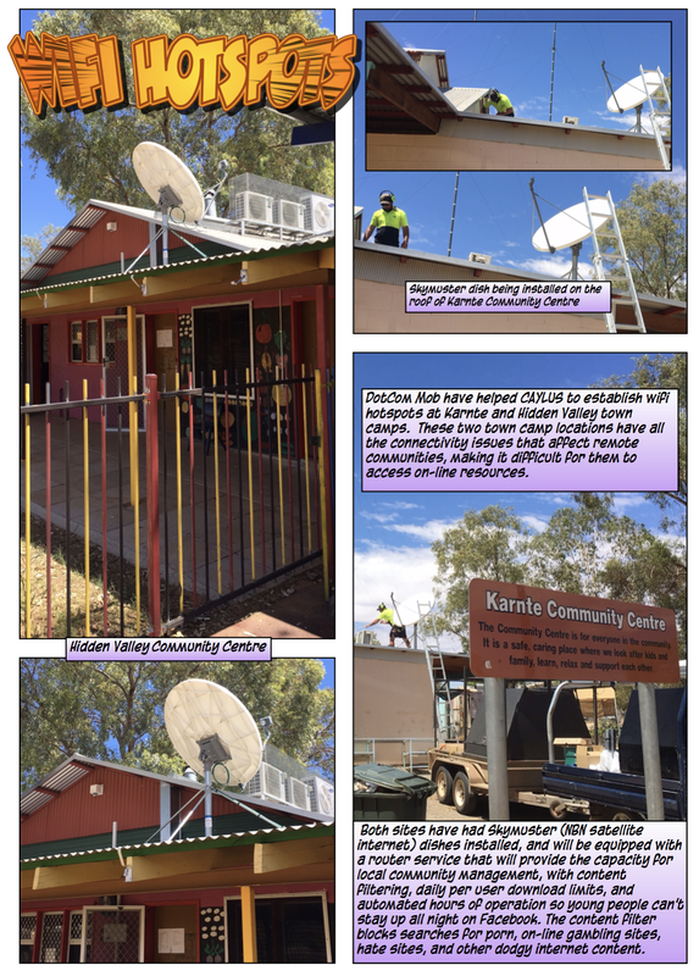
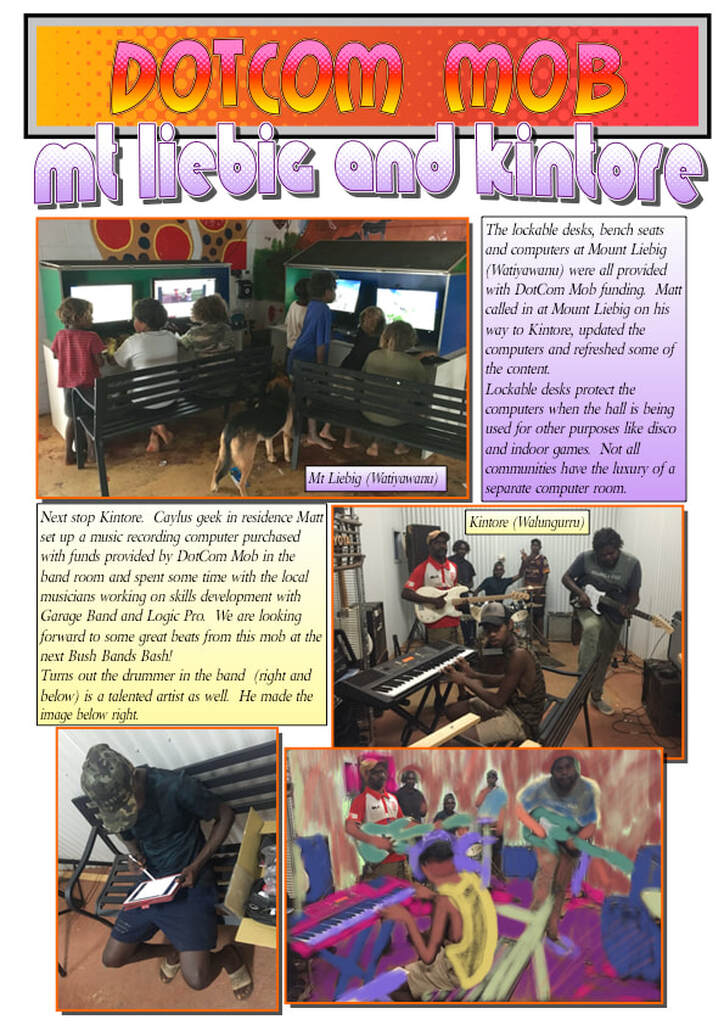
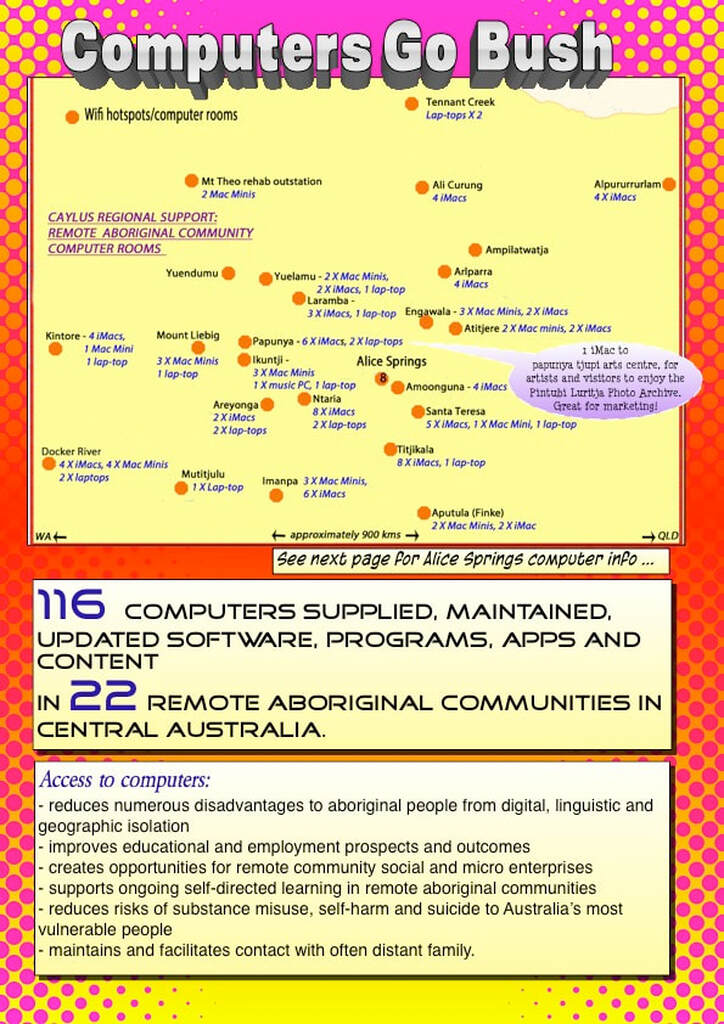
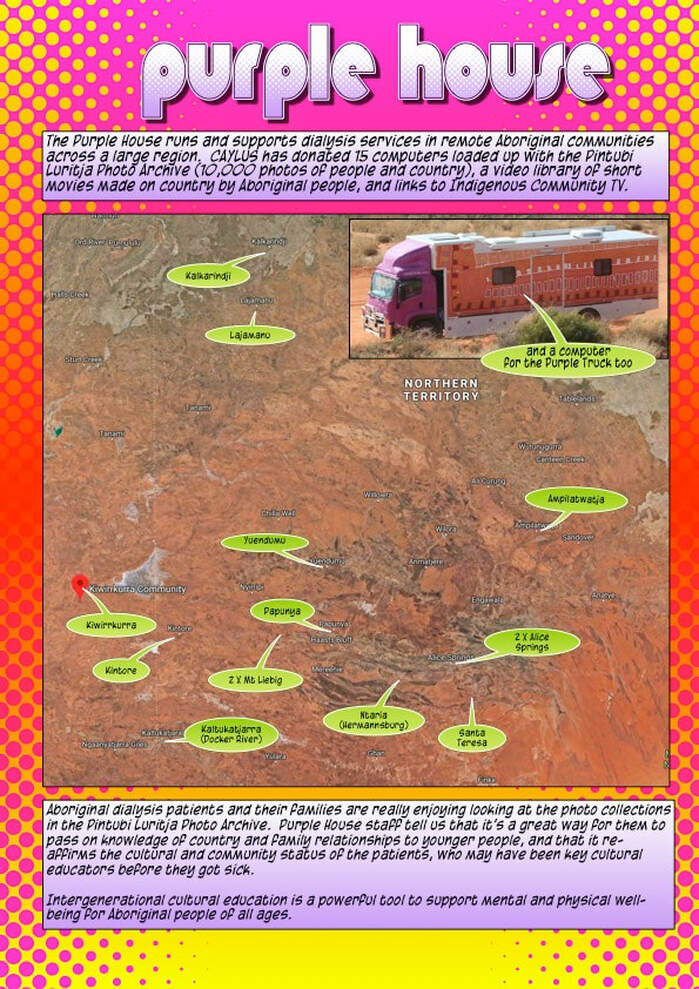
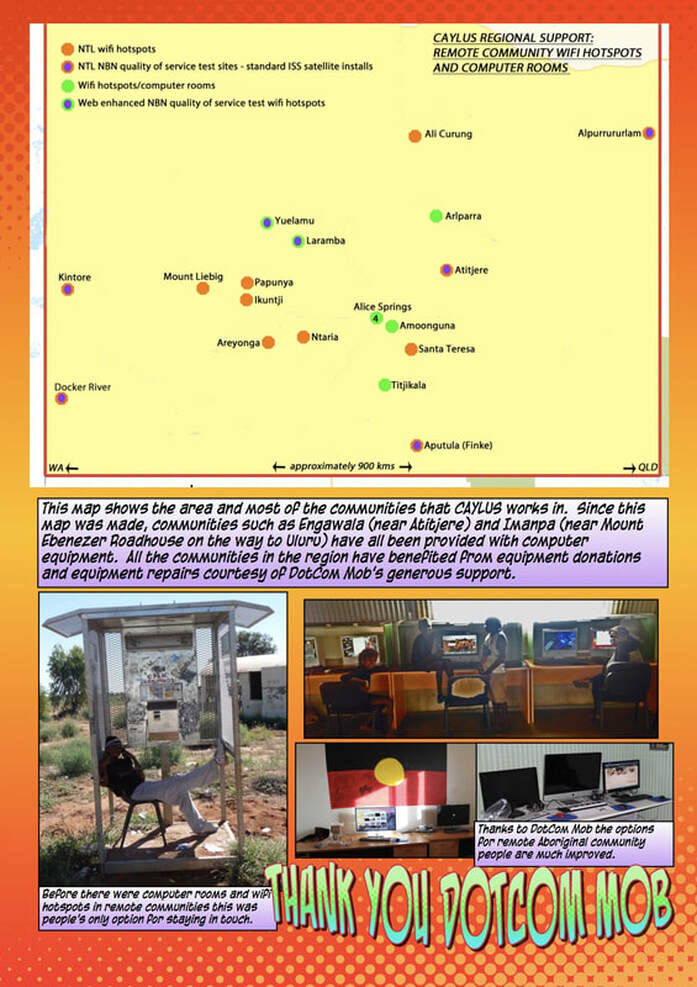
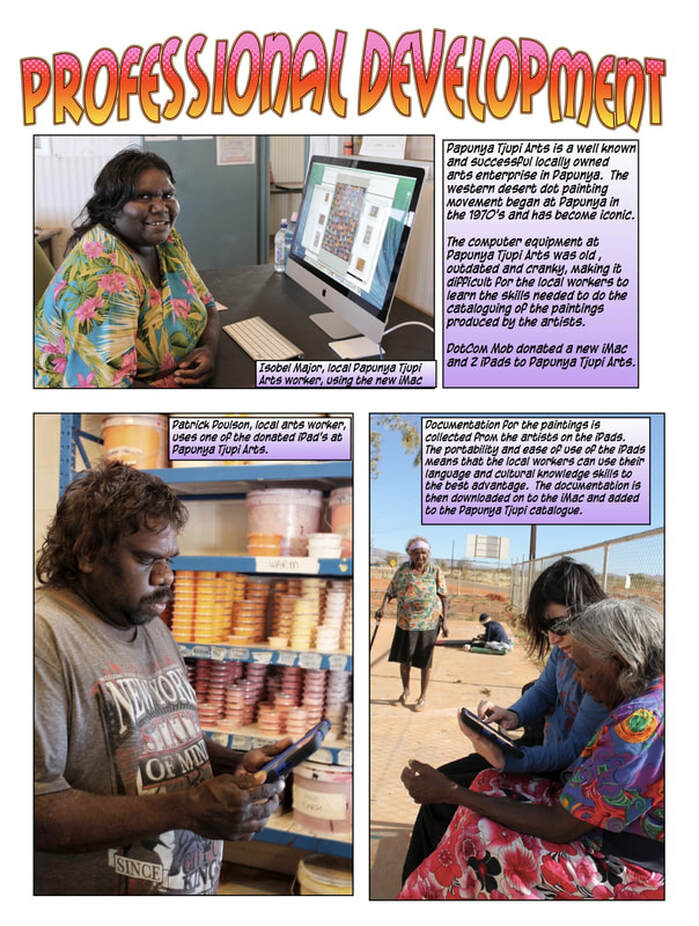
http://youtu.be/folHpHeXwOc A multi-media project created by the children of Wujal Wujal, that featured local language, Kuku Yalanji, was screened publicly last week for the first time. Few would consider rap music an effective tool for practicing traditional Aboriginal language and bringing communities together but that is exactly what it has done in the Wujal Wujal last week. With the support of the charities Dot Com Mob and the ING Foundation, school kids aged 8-12 from Bloomfield River State School, have written, performed and recorded a rap song and accompanying video clip in the local language, Kuku Yalanji. The project’s multi‐media trainer, Wade MacKinnon and the children’s teacher, Jacqui Levy, helped the young kids identify the aspects of their local community that they were the most proud of and developed a rap song that described their life in Wujal Wujal community. This song was then translated into the local language. Norman Tayley, the local language specialist who assisted the kids with the translations, highlights how important the project was for their community, “We have to show our kids how important language is to keep our culture alive, because if the kids aren’t speaking the language then their children won’t be speaking it and it will be lost forever.” The accompanying video clip created by the children and the technical support crew, featured local sacred sites from the Bloomfield area including the Weary Bay beach and the Wujal Wujal Falls. The children also learnt how to make clay figurines of themselves and local wildlife particular to the area, that were animated into the film. Kathleen Walker, Traditional Owner of the Wujal Wujal area, who accompanied the children on the filming trips to the sacred sites, describes her joy at seeing the children perform their rap song, “Hearing kids singing and dancing in language makes me so happy, I was so proud.” The finished rap song and video clip was screened for the entire Wujal Wujal community last Thursday night. Local residents of all ages enjoyed seeing the special parts of their community highlighted in the video and the creativity and expressiveness of the children. Add Comment Dot Com Mob has been financially supporting the computer room at Papunya that was established by CAYLUS in March 2009. We are providing funds for Internet access, to employ a local Indigenous staff member and an onsite manager. Our CEO, Mieka White, is volunteering at the computer room for a month to see how the computers are being used and to determine the social impact of the project on the wider community. She will be updating this blog with news from Papunya. Click here for more details about the project. Wujal Wujal is located approximately 30km north of Cape Tribulation and 60km south of Cooktown. Access to the community is via an unsurfaced track road which is only suitable for four wheel drive vehicles due to the gradient of the terrain and the many streams and rivers that make up the Daintree Drainage Basin. During the wet season the road is unpassable. Because of the town’s isolation, the kids are often bored and engaging in anti-social behaviour. A multi-media training program has been implemented using the funds raised by Sebel Pier One and Harbour Rocks Hotels. The aim is to engage the young people of the Wujal Wujal Community to partake in healthy activities that build self-esteem and a sense of belonging and connectedness to their culture. The program not only provides arts activities for children and young people, but it is also linked to professional development and employment opportunities of local Indigenous artists. The participants have been capturing their community’s local stories and developing scripts. Some of the participants have started developing music for the film’s soundtrack. Weather permitting, participants have been filming aspects of community life using a variety of different techniques and equipment types. A short film has been compiled of the footage that was captured in the first few weeks of the training program. The quality of the footage is low but it was an opportunity for the kids to see what they have shot and learn how they may improve on their filming techniques. It will also be used for the school kids, to inspire their imaginations to come up with some more ideas for using the cameras as well as take them onto the next steps of learning how to edit. The Indigenous Youth Mobility Program (IYMP) helps young Indigenous people move away from home to gain the skills they need to get a job in their community or elsewhere. Indigenous people aged 16 to 24 from remote areas can relocate to Canberra to undertake post secondary education and training options. Training options include Australian Apprenticeships, Vocational Education and Training (VET) and Higher Education that leads to qualifications in nursing, teaching, business administration and accounting, to name but a few possibilities. The Department of Education, Employment and Workplace Relations (DEEWR) provides subsidised, supervised and supported accommodation in the ACT along with mentoring, career planning and numerous other support mechanisms so that young Indigenous people can achieve their goals. Further information can also be found on the DEEWR website: http://www.deewr.gov.au/Indigenous/Schooling/Programs/YouthMobilityProgram/Pages/ProgramSummary.aspx New Indigenous Insights Daily 03/08/2011
Many of you are probably familiar with the paper dailies but we thought that it might be a good way to display what is happening in Indigenous affairs every day. Please let us know if there are any other Indigenous writers that you enjoy following. Yoga Aid Supports Dot Com Mob 10/25/2010
![]() The Australian Yoga Aid Challenge on Sunday 14th November has the dual focus of bringing the yoga community together and raising funds for charity. Thousands of Yogis are expected to attend free, special two hour yoga practices across Australia to raise money for their selected charity. Whilst attendance is free, participants fundraise for charity in the lead up to the event. Therefore, by registering for an event in your local area, you are helping to create strong communities based on giving. Practicing with some of the world’s most influential yogis is an added bonus! By choosing Dot Com Mob as the selected charity, participants and Yoga Aid will help change the lives of Indigenous children living in remote communities. The Dot Com Mob is a not-for-profit organisation working on closing the literacy gap between Indigenous and non-Indigenous people by upgrading or establishing community-owned technology centres. These centres can then provide online training and IT support in the most remote communities, which in turn promotes dramatic improvements in educational engagement and literacy levels. Money raised for Dot Com Mob, through this year’s Yoga Aid event, will directly support Papunya, an Indigenous community of 300 people located in Central Australia. The Papunya centre currently provides local people of all ages with access to ten donated computers, a printer/scanner and a laminator. These resources are supplemented by limited free access to the Internet. The funds raised will pay for a dedicated on-site employee – to keep the centre open for 30hrs a week, and offers direction and assistance to those unfamiliar with IT applications and equipment. It is also an aim that the technology centre established within this community will provide access to virtual yoga classes for the children, thus teaching them the many benefits of yoga in promoting economic empowerment, wellness and community development. To support Dot Com Mob through Yoga Aid, ‘challengers’ just have to register on the Yoga Aid website prior to the 14th November event here http://www.yogaaid.com/australia/registernow and then select Dot Com Mob as your preferred charity. Or if you are unable to be a challenger but would like to sponsor me please click on http://www.yogaaid.com/gayewhite to visit my fundraising page and donations will be made to the Dot Com Mob. My work with self organised learning by children shows that groups of children can learn to use computers and the Internet to answer almost any question. This happens everywhere and is independent of what language they speak, where they live and how rich or poor they are. All they need is free access and the liberty to work in unsupervised groups. The most effective group size seems to be 4-5 children. Read More The Chairman of Dot Com Mob, Robert Magid, talks about how the success of the Indigenous Knlowledge and Technology Centre in Hope Vale, Cape York, Queensland. Indigenous Newslines March - May 2010 04/21/2010
Indigenous Newslines is a free magazine on Aboriginal and Torres Strait Islander issues which is published quarterly in hard copy and online. It provides information on Australian Government services and programs and includes inspiring Aboriginal and Torres Strait Islander stories from across the nation. The following article covers the success of the Hope Vale indigenous Knowledge and Technology Centre. Our own place An Indigenous Knowledge and Technology Centre is a window to the world for the community of Hope Vale in far north Queensland. At the Hope Vale centre locals can access library books, magazines and DVDs, and music, games and the Internet thanks to 12 computers. There is an after-high school homework club, reading programs for young children and school holiday programs. Around 50 to 60 community members visit every day and after-school activities engage about 30–50 children at a time. What sets the centre apart from regular public libraries is the relaxed, friendly space that is ‘owned’ by the community, giving local kids the chance to learn in their own setting. “We have information on Indigenous people, we have Aboriginal art on the walls, we’re engaging with our people to suit the needs of our people,” centre coordinator Shirley Costello says. “At school you sit at your desk in a classroom to do your work, but here you can do the same work lying on a cushion, listening to music, and it makes all the difference. That’s what we, the Indigenous people, want. “It’s an old saying by a lot of our elderly people that Indigenous people are fortunate because we can mix in both worlds – our culture and non-Indigenous culture.” Kids at the centre have become experts at using the Internet, posting YouTube clips, doing karaoke and researching interests such as fishing or football. Older users meet to record their stories and autobiographies, use Google Earth to spot their place in the world, or chat with friends and family on Skype. Others are making their own digital photo albums, calendars, business cards or CVs. “Having that access is a giant leap for a remote Indigenous community,” Costello says. “A knowledge centre and the Internet help our kids’ self esteem and our people to be more up-to-date with the wider world – you’re looking through a bigger picture. “I say to other communities, go for it because it opens up a whole new world to your people. Our motto here is that learning never stops. It started with the message stick – we continue today with the memory stick.” The Hope Vale centre is one of 18 knowledge centres owned, managed and staffed by local Indigenous councils. It was established with support from the non-profit company Dot Com Mob (www.dotcommob.org), which is helping to bring the Internet to remote communities, and the State Library of Queensland www.slq.qld.gov.au/about/who/orgchart/ils/ikc Hope Vale is a Cape York Welfare Reform community. Visit the FaCH Mayor Desmond Tayley and Personal Development Officer, Garry Ashworth begin_of_the_skype_highlighting end_of_the_skype_highlighting share their thoughts about the recently upgraded Indigenous Knowledge and Technology Centre at Wujal Wujal and discuss the positive benefits it has had on their community. Watch the short interview below. |